
Why Dubai Real Estate Investors Are Turning to Villas and Townhouses in 2026
Dubai’s real estate market continues to attract investors from around the world, but in 2026 an interesting shift in buyer behaviour is becoming increasingly visible.
While apartments remain the dominant property type by transaction volume, villas and townhouses are attracting strong interest from investors and end users looking for more space, community living, limited supply and long-term value.
According to H1 2026 market data, apartments represented approximately 84% of residential transaction volume. However, villas accounted for a disproportionately high share of total transaction value, highlighting the significant amount of capital being directed toward larger residential properties.
1. Demand Is Shifting Toward Larger Homes
One of the clearest trends in Dubai’s residential market is the continued demand for larger living spaces.
Buyer requirements have evolved. Many residents are no longer looking only for a property close to their workplace or Dubai’s central business districts. Families increasingly consider the overall quality of the community, including:
- Larger internal living areas
- Private gardens and outdoor spaces
- Additional bedrooms
- Maid’s rooms
- Private or covered parking
- Community parks
- Swimming pools
- Schools and nurseries
- Sports and fitness facilities
- Family-oriented amenities
This has helped master-planned villa and townhouse communities attract both end users and long-term investors.
Market research published during 2026 also indicates this shift. Betterhomes reported that while apartment enquiries declined during Q1 2026, enquiries for villas and townhouses increased by 15% year-on-year.
For investors, strong end-user demand can be particularly important because it may support both resale liquidity and long-term rental demand.
2. Villa and Townhouse Supply Remains More Limited
Supply is one of the most important factors investors should consider when evaluating Dubai real estate.
Dubai continues to deliver substantial numbers of new residential properties, but much of that supply consists of apartments.
During the first half of 2026, approximately 24,800 new residential units were delivered across Dubai. Around 18,900 were apartments, compared with approximately 5,900 villas and townhouses.
This difference matters.
When a property type has relatively constrained supply but sustained demand, quality properties in desirable communities can become increasingly attractive to buyers.
Investors therefore aren't simply asking:
“How much will this property increase in value?”
They are increasingly asking:
“How much competing supply will exist when I want to rent or resell this property?”
That is an important distinction in a maturing real estate market.
3. Villa and Townhouse Prices Have Shown Resilience
Dubai’s villa and townhouse sector continued to demonstrate pricing strength during the first half of 2026.
Market analysis based on Dubai Land Department data reported that average villa and townhouse sales prices increased approximately 17% year-on-year during H1 2026, while average price per square foot increased approximately 6%.
This does not mean every villa or townhouse will appreciate at the same rate.
Performance varies significantly depending on the developer, location, community, property size, purchase price, supply, payment plan and quality of the development.
However, the figures demonstrate why investors continue to pay close attention to this segment of Dubai’s residential market.
4. Master-Planned Communities Are Becoming Investment Destinations
Dubai’s expansion is creating a new generation of residential destinations.
Rather than focusing exclusively on Downtown Dubai, Dubai Marina or other established apartment markets, buyers are increasingly exploring master-planned communities offering complete residential environments.
These communities often include landscaped parks, schools, retail outlets, swimming pools, sports facilities, cycling tracks, children's play areas and community centres.
For families, this provides a lifestyle.
For investors, it can create something equally important: a long-term reason for tenants and buyers to choose the community.
Communities such as The Valley by Emaar, Dubai Hills Estate, DAMAC Hills 2, DAMAC Lagoons, Dubai South and other developing residential destinations continue to attract attention from buyers looking for villas and townhouses.
5. The Valley by Emaar Shows the Direction of Family-Focused Dubai
One example of this trend is The Valley by Emaar.
The Valley has been developed around family-oriented community living, combining villas and townhouses with green spaces, recreation, retail and lifestyle amenities.
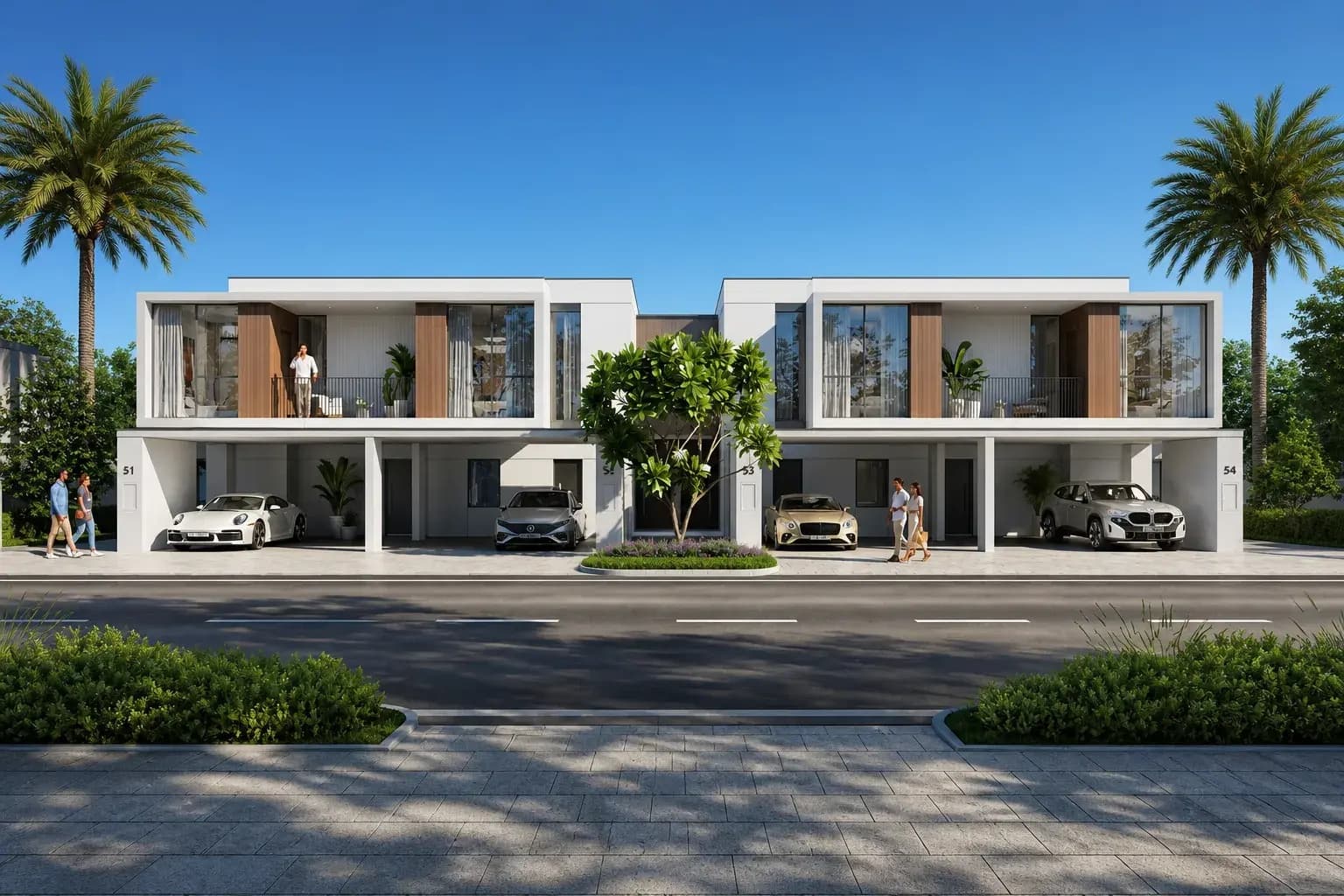
Projects such as Alva at The Valley offer buyers access to modern 3 and 4-bedroom townhouses within an expanding Emaar master community.
For an investor, developments like this are interesting not simply because they are new.
The bigger investment question is whether the surrounding community can continue developing into a desirable residential destination by the time the property reaches handover and enters the resale or rental market.
That is why location, master developer, infrastructure and the overall community plan should be considered alongside the property's purchase price.
6. Investors Are Becoming More Selective in 2026
Dubai's property market remains highly active, but 2026 buyers are showing greater selectivity.
During H1 2026, more than 80,000 residential properties were sold with a combined value exceeding AED 226 billion, according to market research.
Off-plan remained a major part of the market, representing more than 70% of residential sales.
However, investors are increasingly evaluating:
Developer Reputation
A developer's delivery history, construction quality and reputation can influence both resale and rental demand.
Location
Investors should consider connectivity, infrastructure, schools, employment centres and future development surrounding the property.
Entry Price
A good property purchased at an unrealistic price is not necessarily a good investment.
Comparing the price per square foot against competing developments and established nearby communities remains important.
Payment Plan
Off-plan villas and townhouses can require substantial capital, so payment structures can significantly affect an investor's cash flow and overall return.
Handover Date
Investors should understand when their property is expected to complete and what competing projects are scheduled for delivery around the same period.
Exit Strategy